Deep Cleaning Hotel Water Tanks Safely: 2026 Ultimate Guide

Master the essential safety protocols for deep cleaning hotel water tanks to keep your guests safe, pass inspections, and protect your plumbing.
Essential Safety Protocols for Deep Cleaning Hotel Water Tanks: The Definitive Guide
Let’s be honest for a moment: managing a hotel comes with a million moving parts, and the water system is usually a case of “out of sight, out of mind”—until something goes terribly wrong. If a guest turns on a tap and gets a whiff of sulfur, or worse, if a Legionella outbreak hits your property, your reputation can vanish overnight.
Look, I get it, scrubbing a massive commercial tank is exhausting, stressful, and honestly, a bit dangerous. But maintaining water hygiene isn’t just about keeping the water looking crystal clear; it’s about compliance, liability, and human health. Whether you are a hands-on property owner or a facilities manager training your in-house maintenance crew, implementing the right safety protocols for deep cleaning hotel water tanks is non-negotiable.
Here is the real talk about water safety: you cannot just throw a bucket of bleach down a hatch and call it a day. Commercial systems require a structured, safety-first methodology. At TankClean.site, we believe that with the right knowledge, you can execute this high-level maintenance safely, efficiently, and without cutting corners.
Why Hotel Water Tanks Require Special Safety Protocols
Unlike a standard residential setup, commercial hospitality water systems are complex networks of high-volume storage, booster pumps, and extensive pipework. This complexity creates distinct hazards that your team must be prepared to face.
The Hidden Dangers of Confined Spaces
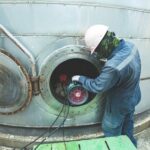
An underground or overhead water tank is legally classified as a confined space. These areas are prone to atmospheric hazards, including oxygen deficiency or the buildup of toxic gases like carbon monoxide and methane. Someone entering a tank without proper atmospheric testing can lose consciousness within seconds. This is why entry permits and continuous air monitoring are foundational parts of any professional maintenance plan.
Biological and Chemical Risks
Over time, the interior walls of a water storage system develop biofilm—a slimy layer of microscopic bacteria, algae, and fungi. When you begin pressure washing or scrubbing these surfaces, these pathogens become airborne in a fine mist. Breathing in this aerosolized bacteria can lead to severe respiratory illnesses, including Legionnaires’ disease. Furthermore, the high-strength disinfecting chemicales used during the deep clean present their own skin and respiratory hazards if handled incorrectly.
Essential Gear: The Safety and Tool Checklist
Before anyone even thinks about opening the access hatch, you need to ensure you have the correct equipment. Skimping on personal protective equipment (PPE) or using the wrong tools is the fastest way to cause a workplace accident.
| Equipment Category | Essential Items | Purpose & Safety Function |
| Personal Protective Equipment (PPE) | Full-body Tyvek suits, heavy-duty nitrile gloves, rubber boots, and full-face respirators with organic vapor/P100 particulate cartridges. | Protects the technician from biological biofilms, airborne pathogens, and harsh chemical fumes. |
| Atmospheric & Safety Gear | Multi-gas detector, explosion-proof ventilation blowers, full-body safety harnesses, and a tripod recovery winch system. | Tests air quality inside the tank, ensures continuous fresh airflow, and allows for emergency extraction. |
| Cleaning & Disinfection Tools | Commercial pressure washer (minimum 2000 PSI), stiff-bristled nylon scrubbing brushes, submersible residual water pumps, and food-grade sodium hypochlorite (liquid bleach). | Dislodges stubborn scale and biofilm, evacuates dirty sludge, and sanitizes the internal surfaces thoroughly. |
Step-by-Step Guide to Safely Deep Cleaning Hotel Water Tanks
Now that the gear is ready, let’s walk through the actual execution. Treat this sequence as your operational bible. Skipping even a single step can compromise either the safety of your team or the cleanliness of the water your guests rely on.
1.System Isolation and Lockout/Tagout (LOTO):Prerequisite Step.
Before anyone approaches the tank, isolate it completely from the hotel’s active plumbing network. Shut off the main inlet valves to prevent fresh water from entering during the clean. Implement strict Lockout/Tagout protocols on all connected booster pumps and electronic valves so nobody accidentally activates them while a technician is inside. Drain the remaining usable water into secondary storage or safely discharge it into the main drainage system.
2.Atmospheric Testing and Mechanical Ventilation:Duration: Continuous.
Drop the probe of your calibrated multi-gas detector to the very bottom of the empty tank. You need to verify that oxygen levels are between 19.5% and 23.5%, and that toxic gases like hydrogen sulfide are completely absent. Once tested, set up your explosion-proof blower to pump fresh air into the space continuously. Keep the gas monitor active and clipped to the technician’s harness the entire time they are inside their.
3.Physical Structural Inspection:Duration: 15-20 mins.
With the air cleared, the primary technician can enter the tank using a secure ladder or winch system, while an active standby watchman remains stationed right outside the hatch. Inspect the structural integrity of the walls, ceiling, and internal supports. Look for cracks, spalling concrete, or rusting metal. If the structure is sound, procced to use a submersible pump to remove the thick, stagnant sludge settling at the bottom of the tank.
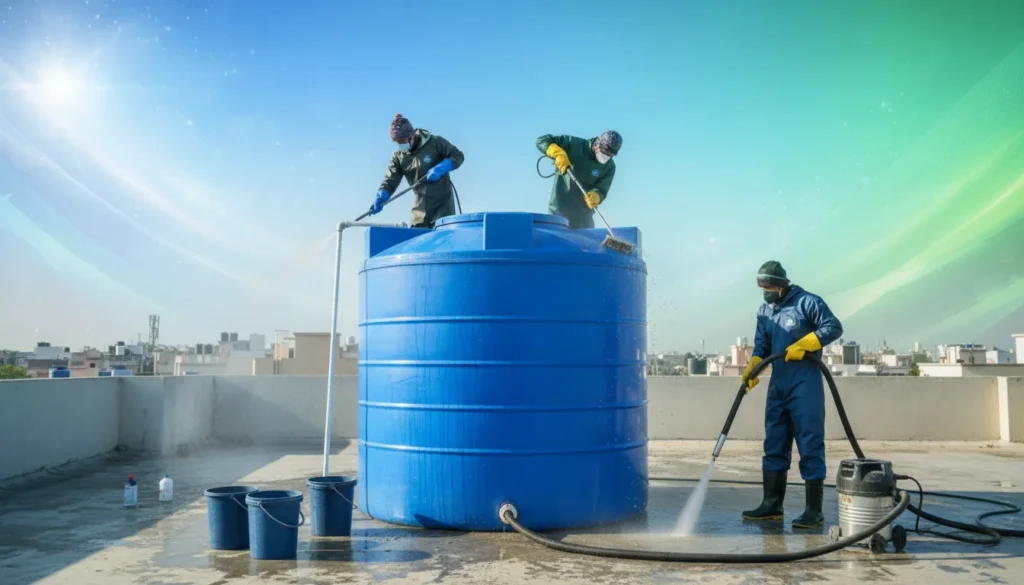
4.High-Pressure Washing and Manual Scrubbing:The Deep Clean Phase.
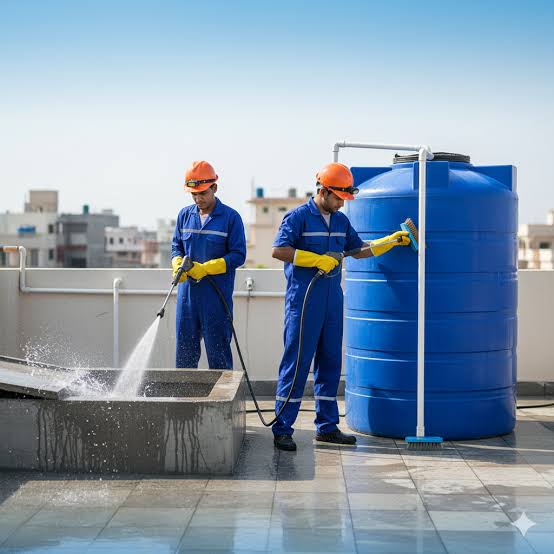
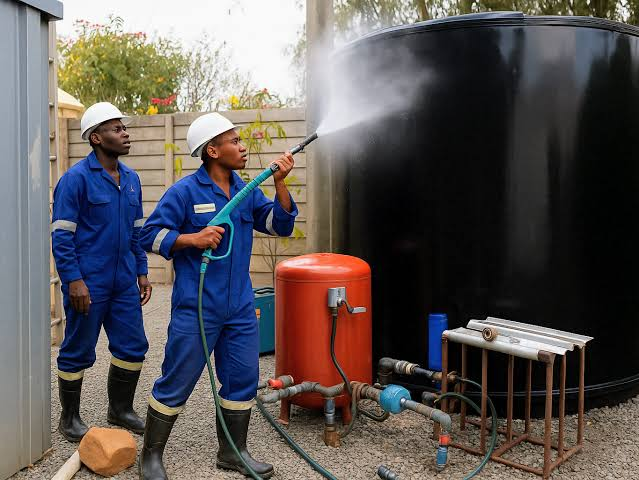
Use a commercial pressure washer to blast away scale, sediment, and slime layers from the ceiling, walls, and floor, working from top to bottom. For stubborn patches of scale or deep rust staining, use stiff-bristled manual brushes. Constantly pump out the dirty wash water so it doesn’t accumulate.
5.Chemical Disinfection and Squeegee Removal:Sanitization Phase.
Apply a sanitizing solution of food-grade sodium hypochlorite (chlorine bleach) diluted to roughly 50 parts per million (ppm) across all internal surfaces. Let this solution sit for at least two hours to completely eradicate any remaining microscopic biological traces. Afterward, thoroughly rinse the entire tank with clean water and use clean squeegees to push every last drop of chemical residue into your waste pump.
6.Refilling, Testing, and Re-commissioning:Final Verification.
Close the drain valves and slowly refill the tank with fresh water. Before opening the valves to the hotel rooms, test the water quality. Use digital meters to check the pH balance and ensure the residual chlorine level has dropped back down to a safe, potable level (typically between 0.2 and 2.0 ppm). Once the lab or field tests clear, remove your LOTO tags, open the main distribution lines, and bring the system back online.
Managing Post-Cleaning Compliance and Logs
Once the physical work is wrapped up, your job still isn’t quite finished. In the hospitality sector, if it isn’t documented, it didn’t happen.
Always maintain a dedicated water hygiene logbook for your property. Record the date of the deep clean, the specific atmospheric gas readings taken before entry, the types and quantities of chemicals used, and the names of the personnel involved. Keep a copy of the final water quality test certificates on file.
If local health inspectors or corporate auditors show up unexpectedly, handing them a meticulous, up-to-date maintenance log turns a potentially stressful inspection into a total breeze. Plus, it gives you peace of mind knowing that you are operating fully within regional health and safety mandates.
Need More Expert Facility Maintenance Advice?
Keeping a commercial property running smoothly is a massive undertaking, but you don’t have to figure it out all on your own. For more comprehensive guides, downloadable checklists, and expert advice on keeping your property’s water systems pristine, make sure to explore our specialized resources right here on TankClean.site.