How to Clean Apartment Building Overhead Water Tanks Safely: A Complete DIY Guide

Learn how to clean apartment building overhead water tanks safely. Step-by-step property maintenance guide to save money, stay legal, and keep water pure.
How to Clean Apartment Building Overhead Water Tanks Safely
Let’s be completely honest for a moment. Managing an apartment building is a balancing act that never stops. On any given day, you are dealing with broken trash chutes, parking disputes, and elevator maintenance. It is incredibly easy to forget about the massive structural water storage units sitting quietly on your roof.
But here is the real talk about water safety: that rooftop system is the lifeblood of your entire residential community. When you are managing shared infrastructure, a tiny bit of neglect doesn’t just ruin one person’s afternoon—it can compromise the health of dozens of families, kids, and elderly tenants. Over time, dust, airborne pollutants, bird droppings, and rusty pipe residues find their way inside, creating a thick, slimy layer of biofilm along the tank walls. If you leave it sitting under the baking sun without regular cleaning, you are essentially providing a massive incubation center for harmful pathogens like Legionella and E. coli.
Look, I get it, scrubbing a tank is exhausting but outsourcing this to expensive commercial cleaning corporations every few months can rip a massive hole straight through your property management budget. If you have a dedicated on-site caretaker, an active resident committee, or a couple of handy individuals, learning how to clean apartment building overhead water tanks by yourself is entirely achievable.
Here at TankClean.site, we serve as the definitive online hub for professional-grade DIY water tank cleaning guides, maintenance tips, and water hygiene. We believe that shared residential communities shouldn’t have to choose between financial strain and clean water. Let’s break down the technical safety strategies, tool arrangements, and operational steps needed to execute a flawless multi-family tank restoration project safely and smoothly.
The Unique Realities of Overhead Apartment Tanks
Before we start packing up our tools and heading to the roof, we have to look closely at how a shared building’s water network functions.
Unlike a small standalone home where a single pump does all the work, an apartment complex relies on a two-tier gravity system. Water is drawn from a main municipal connection or a deep underground boring hole, pumped up to the rooftop overhead reserve, and then fed downward through separate vertical pipe risers into each individual flat.
Because the water in these rooftop structures sits at the highest point of the property, it is exposed to extreme atmospheric temperature fluctuations. High heat warms the plastic or concrete surfaces, which accelerates algae growth dramatically. This means these units actually require more frequent cleaning intervals—ideally once every six months—compared to buried underground reserves.
Essential Equipment and Safety Checklist
When you scale up from a simple domestic tank to an apartment-sized reservoir, manual bucket-and-sponge methods will leave your team exhausted and the job incomplete. You need specialized tools to manage the high volume of water and ensure the cleaning team stays completely safe while working at height.
Review this essential pre-project checklist before sending anyone up to the roof layout.
| Equipment Type | Essential Tool Requirement | Primary Function in Multi-Family Tanks |
| Water Extraction | Heavy-Duty Submersible Sludge Pump | Rapidly drains thousands of gallons of residual water and mud. |
| Surface Scouring | Commercial High-Pressure Jet Washer | Blasts off calcified mineral scale and sticky algae without scrubbing. |
| Sanitizing Agent | Industrial Sodium Hypochlorite (Bleach) | Eradicates microscopic bacteria colonies and biofilm roots. |
| Personal Safety | Harness, Rubber Boots, and Gas Respirator | Protects workers from roof edge falls and inhaling toxic chlorine fumes. |
| Illumination | Waterproof 12V LED Work Lights | Provides bright, shock-proof visibility inside dark concrete chambers. |
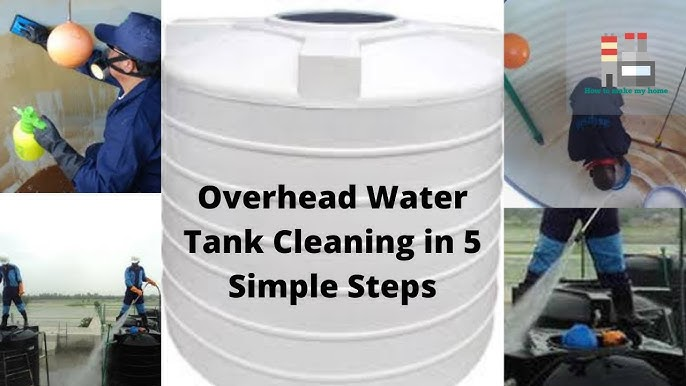
The Step-by-Step Multi-Family Overhead Tank Cleaning Guide
Now that your maintenance crew is assembled and your equipment is verified, it is time to procced with the actual cleaning operations. Follow these steps methodically to avoid structural mistakes or tenant panic.
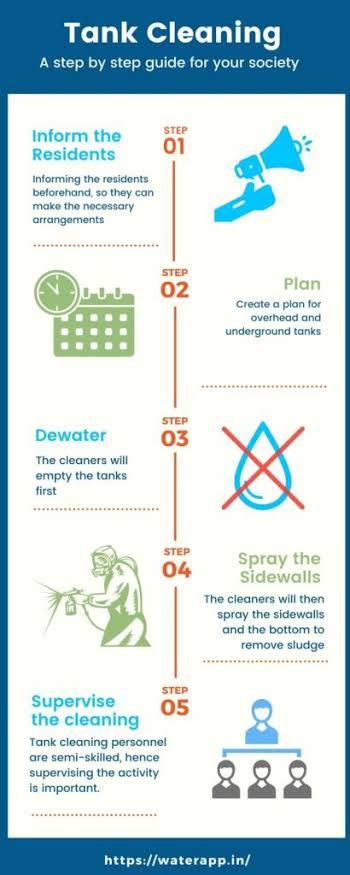
Step 1: Pre-Notification and Resident Management
Never turn off a building’s water supply without telling people first. Give your residents a minimum of 48 hours of advanced notice via flyers, building group chats, or notice board announcements. Clearly state the exact hours the water will be cut off so they can store enough water for basic cooking and bathroom needs.
Step 2: Strategic Network Isolation
Head to the roof and locate the primary inlet line coming up from your main booster pump. Shut this valve down tightly to prevent new water from entering while you work. Next, close the main distribution valves that send water down into the building’s apartments. This step is non-negotiable; if you leave these open, all the loose mud, rust flakes, and concentrated chemicales you stir up will run down into their system lines, causing massive pipe blocks and toxic tap contamination.
Step 3: Evacuating the Top-Water Volume
Drop your submersible sludge pump into the tank to evacuate the clean upper layers of water. Instead of dumping this down the building’s roof rain gutters, run a long discharge hose down to ground level to fill up lower utility tanks, or use it to water the property’s lawns and gardens. Stop pumping once you hit the thick sediment line at the very bottom.
Step 4: High-Pressure Wall Blasting and Sludge Extraction
Once the bulk water is gone, you will see a dark, slippery layer of mud and organic matter on the floor and walls. Connect your high-pressure jet washer and blast the interior surfaces from top to bottom. The concentrated water jet will easily strip away calcified salt lines and slick organic growth. Use a clean plastic scoop or your sludge pump to extract this gritty wastewater out of the tank completely.
Step 5: Applying the Disinfectant Shield
With the visible grime removed, you must clean the tank on a microbiological level to stop future algae spores from reforming. Prepare a sanitizing mixture by diluting industrial household bleach with water according to standard proportions. Using a garden spray canister, apply a uniform layer of this solution across all interior walls, columns, structural corners, and the ceiling panel. Allow the chemical coat to rest for 30 to 45 minutes to finish off any deep-seated bacteria spores.
Step 6: The Ultimate Pure-Water Rinse
Take your high-pressure washer and rinse the entire interior space thoroughly with clean water. Continue spraying and pumping out the drainage water until the strong chemical smell completely disappears and the water running along the bottom is crystal clear.
Step 7: System Re-Commissioning and Pipe Flushing
Close the tank’s external drainage ports and open the primary inlet line to let fresh water fill the reservoir up to its standard operating level. Once full, open the main valves that supply the building. Go to the lowest and highest apartment units on the property and run their common utility taps for two minutes to clear out any small air locks and guarantee that any accidental dust residue is entirely flushed away.
Maintaining Your Building’s Compliance Ledger
In multi-family property management, maintaining an organized compliance trail is highly critical. If a local municipal health inspector audits your property or a resident files a complaint about water clarity, simply telling them you cleaned the tank won’t hold up legally.
Always keep a physical maintenance logbook on the property. Document the exact cleaning dates, the chemical concentrations used, and any structural structural repair notes regarding the tank’s lid or external insulation.
At TankClean.site, we consistently remind housing boards that an accurate maintenance ledger is the single best way to shield your management team from liability while proving to your tenants that their community health is in expert hands.
Keep Your Residential Community Safe and Healthy
Mastering how to clean apartment building overhead water tanks is one of the smartest investments an active property manager or community leader can make. It protects your plumbing assets from expensive corrosion failures, prevents structural blockages, and guarantees that every family in your building has access to pure, safe, and clean water.
Don’t let deferred building maintenance lead to health emergencies or costly corporate service fees. Head straight over to TankClean.site now to download our complete Apartment Complex Water Maintenance Tracker Pack, which includes printable tenant notification templates, compliance logbooks, and chemical volume calculation guides.
While you are on our platform, make sure to subscribe to our seasonal maintenance alert newsletter to get automated email reminders every six months so your building infrastructure never misses a critical cleaning window. Explore our complete library of high-authority DIY guides today to take total control of your building’s water hygiene effortlessly!