
Stinky home water? Learn how to get rid of bad smell from water tank safely using simple DIY steps, the right tools, and expert disinfection tips.
How to Get Rid of Bad Smell From Water Tank: The Ultimate DIY Guide
Imagine waking up, heading to the bathroom to brush your teeth, turning on the tap, and getting hit by a foul wave of rotten eggs or stagnant mud. It instantly ruins your morning. When your household water supply smells off, it is a clear warning sign that your storage system is crying out for attention.
Look, I get it, scrubbing a tank is exhausting but ignoring a smelly water tank can lead to skin irritation, ruined plumbing, and actual health risks for your family. Hiring expensive professional cleaning services every few months isn’t always friendly on the wallet either. The good news? You can completely fix this issue yourself with a few basic tools and a solid plan over the weekend.
Here is the real talk about water safety: a bad smell means there are active microbial biological processes happening inside your reservoir. Whether you have a plastic overhead tank baking under the sun or a concrete underground cistern, learning how to get rid of bad smell from water tank structures is an essential homeowner skill. At TankClean.site, we want to empower you to maintain pristine water hygiene safely on your own terms.
What is Causing That Awful Odor?
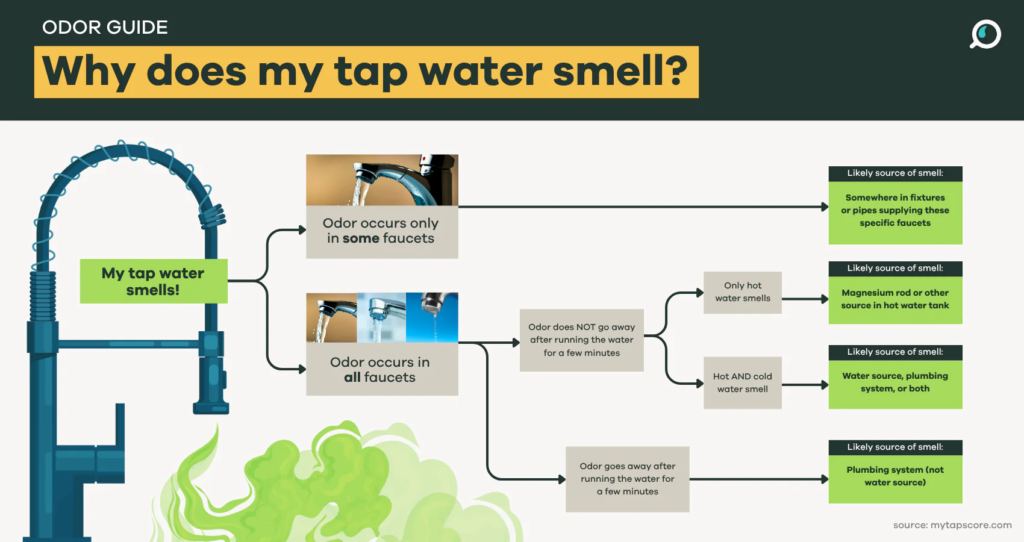
To neutralize the smell permanently, you first need to identify what type of organic or chemical activity is taking place inside the system. Different odors point toward distinct issues.
The Rotten Egg Odor (Hydrogen Sulfide)
If your water smells explicitly like sulfur or rotten eggs, the culprit is almost always sulfur-reducing anaerobic bacteria. These micro-organisms live in oxygen-depleted zones, such as under thick layers of silt and mud at the bottom of the tank. They feed on organic matter and excrete hydrogen sulfide gas, which dissolves directly into your drinking and bathing water supply.
Musty, Earthy, or Fishy Smells
A stale, musty, or moldy odor indicates the presence of algae, fungi, or decaying organic material like leaves or insects that found their way past a loose access hatch lid. When sunlight hits an unsealed or poorly insulated tank, it acts like a greenhouse, accelerating algae growth within days.
DIY Sanitizer Comparison: Bleach vs. Vinegar
When figuring out how to get rid of bad smell from water tank setups, selecting the proper cleaning agent is crucial. Let’s look at how the two most popular options stack up for a household DIY project.
| Feature & Performance | Food-Grade Liquid Bleach (Chlorine) | White Distilled Vinegar (Acetic Acid) |
| Odor Elimination Power | Outstanding; completely destroys sulfur-producing bacteria, viral pathogens, and mold spores instantly on contact. | Moderate; kills mild surface bacteria and helps neutralize basic musty smells but struggles with deep biofilm. |
| Mineral Scale Removal | Minimal; cannot dissolve tough calcium or magnesium hard water buildup effectively. | High; natural acidity breaks down crusty white mineral rings and limescale deposits on tank walls. |
| Environmental Safety | Requires careful handling and thorough flushing to avoid skin or eye irritation from chemicales residues. | 100% safe, non-toxic, and eco-friendly; poses no danger if a small trace amount remains in the system. |
| Recommended Use Case | Best for severe rotten-egg sulfur smells or tanks that haven’t been opened or cleaned in over a year. | Ideal for light, routine seasonal maintenance or thin, superficial musty scale buildups. |
Step-by-Step Guide to Eliminate Water Tank Odor
Now let’s walk through the exact physical procedure to refresh your domestic water supply. Grab your supplies, block out a few hours, and let’s get down to business.
1.Isolate the Main Home Plumbing System:Safety Prerequisite.
Turn off the principal inlet valve supplying municipal or well water to the tank. Shut down the electrical power to your water booster pumps and the automated water heater breaker. Close the primary distribution valve leading into your house so that dirty wash water doesn’t travel down into your home faucets or appliances during the deep clean.
2.Drain and Evacuate the Sludge:Duration: 30-45 mins.
Open the tank’s drain valve to run out the remaining clean water. As the water level hits the bottom, you will likely see a thick layer of brown sludge and sediment. Use a plastic bucket, a wet-dry vacuum, or a small submersible utility pump to remove every single bit of this muddy material from the base. Remember, this sludge is where the sulfur bacteria live!
3.Scrub the Internal Walls and Floor:Physical Scrubbing Phase.
Mix a concentrated cleaning solution of water and your chosen agent (liquid bleach or vinegar). Using a stiff-bristled nylon brush or a clean household pressure washer, thoroughly scrub down the ceiling, walls, corners, and floor of the tank. Pay close attention to any joints or crevices where slimy biofilm layers tend to latch on.
4.Apply the Sanitizing Disinfection Solution:Duration: 1-2 hours.
Fill the tank roughly a quarter full with clean water and add your disinfectant. For standard household disinfection, add 1 gallon of household liquid bleach for every 1,000 gallons of total tank capacity. Let this heavily chlorinated mixture sit for at least two hours so it can seep deep into the pores of the material and thoroughly kill off any hidden micro-organisms.
5.Flush and Empty Residual Liquids:Flushing Phase.
Drain the sanitizing solution completely out of the system through your main wash drain line. Use fresh water to rinse down the internal surfaces one final time, making sure to pump out the last remnants of chemicales residue using your wet-vacuum or utility pump so your tap water doesn’t smell like a commercial swimming pool later.
6.Refill, Inspect, and Turn System Online:Final Re-commissioning.
Close all drain outlets and open the main incoming municipal valve to refill the tank completely. Open one or two outdoor garden hose taps first to let any air and remaining traces of air out of the pipes. Once the water looks and smells perfectly clean and neutral, you can safely procced to open the main distribution valve back into your home.
Long-Term Maintenance to Prevent Smells from Returning
Great job! Your water is fresh again, but how do we keep it that way? You don’t want to repeat this entire laborious process next month because of a simple preventative mistake.
First, always ensure your water tank lid fits perfectly air-tight. A loose lid allows dirt, airborne spores, insects, and even birds to compromise the reservoir, starting the bacterial decay cycle all over again. If your tank has an overflow pipe, make sure it is covered with a fine wire mesh to keep bugs out while still allowing the tank to breathe naturally.
Secondly, aim to perform a quick visual inspection every three months and a full flush-out at least once a year. Regular, low-effort maintenance prevents the buildup of the deep anaerobic sludge layers that cause the worst odors in the first place.
Your Home for Reliable DIY Water Hygiene
Taking care of your household water supply doesn’t require calling in expensive industrial teams when you have the right steps under your belt. By understanding how to get rid of bad smell from water tank systems safely, you can secure clean, odor-free, and healthy water for your family all year round. For more diagnostic tips, step-by-step DIY cleaning guides, and household water safety advice, make sure to read more on TankClean.site—your ultimate online home for domestic water hygiene mastery.