
Discover the serious health risks of drinking water from uncleaned tanks. Learn how hidden pathogens form and get our expert DIY guide to fix it.
Health Risks of Drinking Water from Uncleaned Tanks
We turn on the tap, pour a glass of water, and drink it without a second thought. We assume that because the water looks relatively clear, everything is perfectly fine. But behind the scenes, inside your underground or overhead storage system, a completely different story might be unfolding. Look, I get it, scrubbing a tank is exhausting but ignoring what is happening inside that dark chamber can have devastating consequences for your family.
When you leave a domestic water reservoir unmanaged for months or years, it ceases to be a simple storage unit. Instead, it slowly transforms into an active biological incubator. Understanding the true health risks of drinking water from uncleaned tanks is the first step toward reclaiming total control over your home’s hygiene.
Here at TankClean.site, we want to give you the real talk about water safety. You do not need to rely on expensive professional services to keep your water lines pure. With the right expert insights, a few basic tools, and a solid weekend afternoon, you can clean your storage systems entirely on your own and protect your household from entirely preventable waterborne illnesses.
The Hidden Ecosystem Inside an Unclean Tank
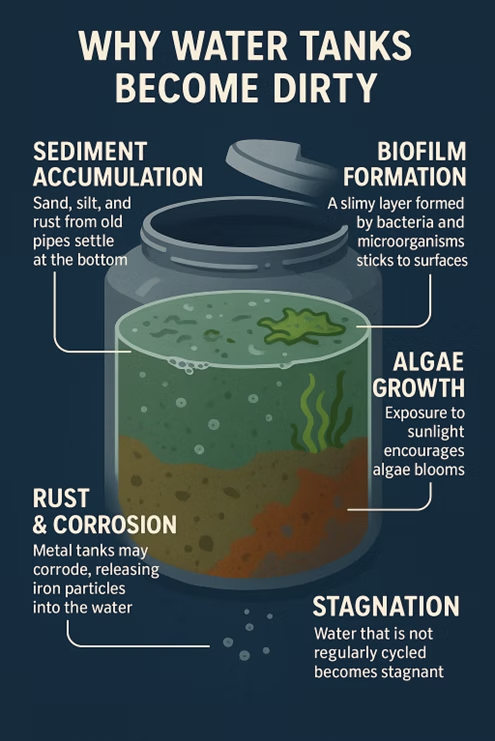
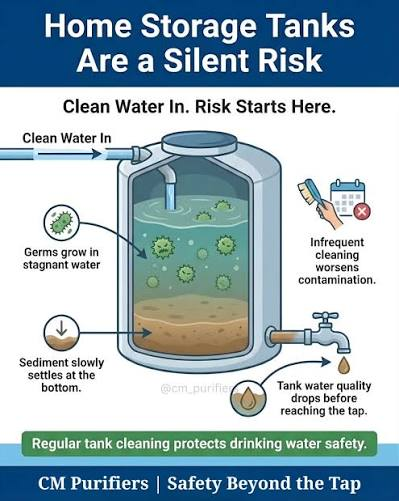
Why exactly do these health hazards develop? It all starts with the incoming water supply. Whether your water comes from a municipal line or a deep tube well, it naturally carries tiny traces of fine sand, silt, and organic matter. Over time, gravity pulls these particles to the floor of your tank, creating a thick, dark layer of sludge.
This sludge serves as an absolute paradise for microorganisms. When warm weather hits, microscopic pathogens begin to feed on this sediment. They build a slimy matrix along the internal walls known as a biofilm. This biofilm acts like a biological shield, protecting dangerous bacteria, viruses, and parasites from minor chemical levels and allowing them to multiply exponentially right into your drinking supply.
Microscopic Invaders: Pathogens and Their Profiles
When a tank is left uncleaned, it becomes vulnerable to several distinct types of hazardous pathogens. Let us break down the primary biological threats that hide inside unmanaged household water storage systems.
1. Bacterial Contaminants (E. coli and Salmonella)
Fecal coliforms, including hazardous strains of Escherichia coli (E. coli) and Salmonella, routinely find their way into residential tanks through cracked lids, unsealed inspection hatches, or groundwater seepage. Once inside, they reproduce rapidly in the bottom mud. Drinking water contaminated with these bacteria causes acute gastroenteritis, leading to severe abdominal cramps, violent vomiting, and dehydration.
2. Protozoan Parasites (Giardia and Cryptosporidium)
These microscopic parasites are incredibly resilient because they possess hard outer shells that allow them to survive regular water treatment processes. Cryptosporidium and Giardia thrive in stagnant, unmanaged reservoirs. If ingested, they cause prolonged diarrheal illnesses that can last for weeks, significantly draining your energy and impacting your immune system.
3. Dangerous Organic Gases (Hydrogen Sulfide)
As anaerobic bacteria (organisms that live without oxygen) decompose the organic sludge at the bottom of an uncleaned tank, they release hydrogen sulfide gas. This byproduct dissolves into your household lines, imparting a highly offensive “rotten egg” smell to your water and causing mild headaches or nausea upon prolonged exposure.
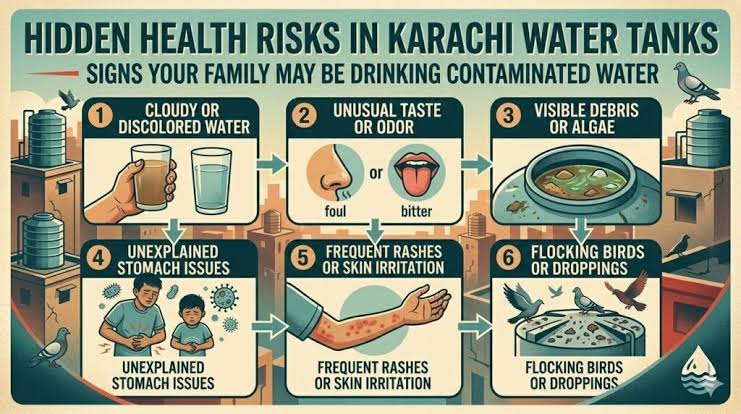
Health Risk Profiler: Symptoms and Biological Triggers
To help you understand how physical changes in your storage system directly translate to personal medical vulnerabilities, analyze this quick diagnostic assessment.
| Visible Water Symptom | Underlying Contaminant | Key Health Risks | Vulnerable Groups |
| Pungent, sour, or rotten egg odor | Hydrogen sulfide & sulfur-reducing bacteria | Nausea, chronic headaches, digestive discomfort | Everyone in the household |
| Slimy green, black, or brown wall coatings | Advanced biofilm and cyanobacteria (blue-green algae) | Skin rashes, eye irritation, liver-damaging toxins | Children and individuals with sensitive skin |
| Cloudy, turbid, or muddy appearance | Heavy suspended silt and fecal coliforms | Acute diarrhea, severe stomach cramps, typhoid risk | Toddlers, elderly family members, pregnant women |
| Rusty color with a sharp metallic taste | Iron-oxidizing bacteria feeding on corroded tank joints | Stained teeth, disrupted digestion, systemic bacterial growth | Immunocompromised individuals |
If you notice any of these warnings in your home, their is absolutely no time to waste. Let us look at the exact step-by-step DIY sequence required to eliminate these health risks of drinking water from uncleaned tanks without needing a professional crew.
Step-by-Step Guide: How to Clean and Decontaminate Your Water Tank
Follow this complete home care blueprint carefully to purge your system of toxic biological accumulation and secure your water lines.
Step 1: Isolate and Drain the Reservoir
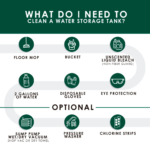
Turn off the main electrical power to your water booster pumps. Close the primary distribution valve that sends water down into your house so no loose sludge or chemicales accidentally enter your home plumbing during the cleaning process. Connect a submersible utility pump to a long drainage hose and empty the entire contents of the tank into an external sewer line.
Step 2: Clear Out the Sludge Layer
Put on high-quality rubber boots, protective eyewear, and a well-fitted face mask. Once the water level is down, use a plastic shovel or a wet-dry vacuum to physically remove the thick layer of mud and silt sitting on the tank floor. Collect this debris in buckets and throw it away outside your property.
Step 3: Scrub the Internal Walls to Break the Biofilm
Mix a simple cleansing solution of fresh water and standard liquid dish soap in a bucket. Using a stiff nylon scrubbing brush (or an extension pole brush if you are working from the outside hatch), vigorously scrub every square inch of the internal walls, ceiling corners, and joints. You must apply enough pressure to completely scrape away the slimy biofilm layers where bacteria hide. Once finished, rinse the walls completely with a high-pressure garden hose and pump out the soapy residue until the floor is totally dry.
Step 4: Execute Shock Chlorination
To completely eradicate the remaining microscopic pathogens, you must perform shock chlorination. Fill the tank completely with fresh water. For standard liquid household bleach (5% to 6% sodium hypochlorite strength), add 1 liter of bleach for every 1,000 liters of tank volume.
Mix the solution thoroughly. Open your main home valve for just 60 seconds and run every indoor tap until you detect a faint scent of chlorine, then turn them off. This ensures the disinfectant fills your home pipe lines too. Let the system sit completely undisturbed for 4 to 6 hours to procced with full sterilization.
Step 5: Final Drainage and Faucet Flushing
After the disinfection period, use your submersible pump to empty the highly chlorinated water completely out of the tank. Do not discharge this water onto your garden lawn, as concentrated chlorine will immediately kill grass and sensitive plants. Refill the tank with fresh water from your clean municipal supply line. Go inside your house and open every faucet, shower, and outdoor tap on full blast for 5 to 10 minutes to completely flush out any residual chemical water from your lines.
Critical Mistakes to Avoid in DIY Water Hygiene
When taking your family’s health into your own hands, make sure you don’t commit these simple oversight errors:
- Leaving the Tank Lid Loose: You can perform a perfect deep clean, but if your inspection lid is cracked or loose, lizards, birds, and insects will crawl inside within days, restarting the bacterial cycle all over again. Ensure your hatch is airtight and securely locked.
- Forgetting to Flush the Water Heater: High chlorine or bacteria can remain trapped inside your home’s water heater tank if you only flush the cold water taps during your final rinse. Always run your hot water lines until the water smells perfectly fresh.
- Skipping the Pre-Scrubbing Phase: Simply pouring bleach into a muddy tank does not work. The chlorine will quickly bind to the organic mud particles, neutralizing its killing power before it ever reaches the dangerous bacteria living underneath the sludge. Always scrub first!
Your Dedicated Resource for Pristine Home Water
Protecting your loved ones from the invisible health risks of drinking water from uncleaned tanks doesn’t require a master’s degree in engineering or a massive maintenance budget. It simply takes a systematic approach, a couple of basic tools, and a commitment to regular bi-annual inspections.
For more expert calculations, structural advice, and DIY maintenance blueprints, explore our comprehensive collection of resources right here on TankClean.site. We are continuously building easy-to-use content to ensure your household water stays clean, safe, and completely worry-free.
Ready to completely secure your home water network? Download our free Ultimate DIY Water Tank Cleaning & Sanitization Checklist right now to guide your next project step-by-step, or subscribe to our newsletter below to receive automated seasonal maintenance notifications right when your tanks are due for their next deep clean!